Yield management is a key factor in making great wines. The most important
decisions are already made during winter pruning. But now, with the harvest
in sight, it is time for some fine-tuning. Depending on the grape variety,
there is more or less to do. But thinning the yield to a level that will help
us harvest grapes with the ripeness we need, is what really counts.
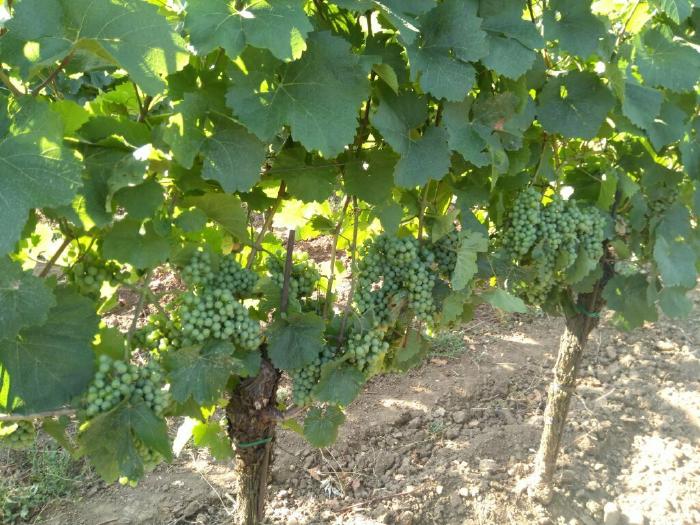
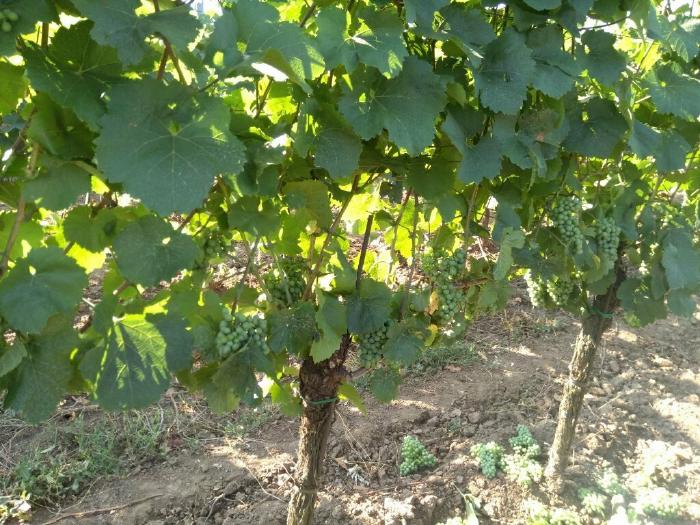
weigelt vines before thinning.
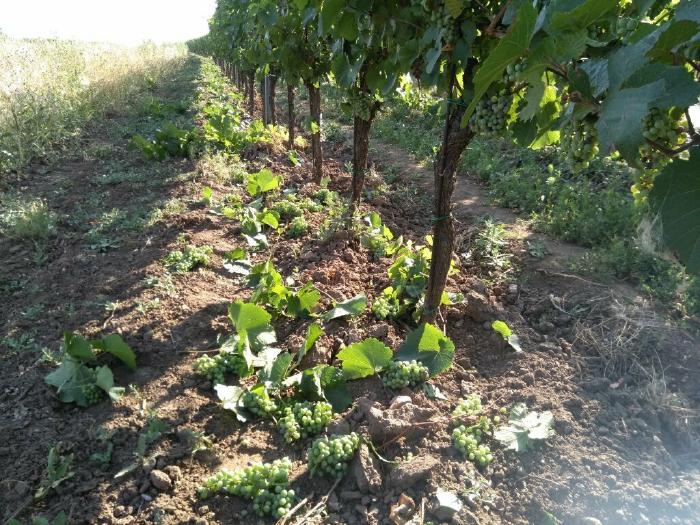
The Images show Zweigelt grapes before and after thinning. Zweigelt profits
exceptionally from reducing the yield, altough this example might be a bit radical.
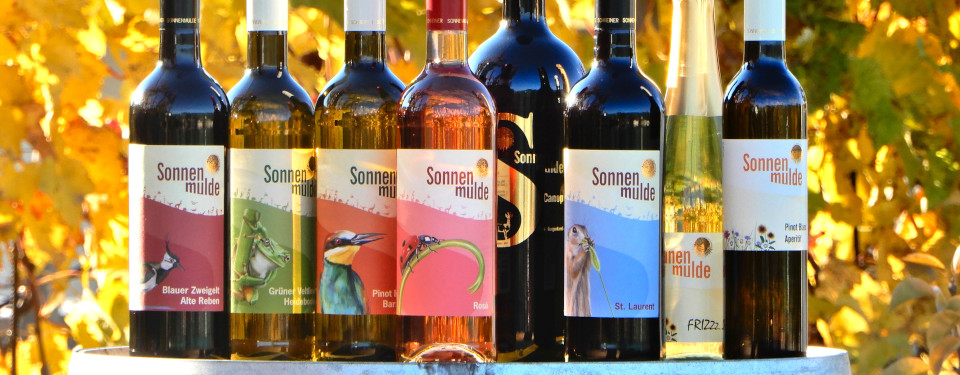
But these grapes are intended for our premium barrique wine,
Capella. Only the best, free hanging grapes are kept and
only one per shoot is allowed. This is a prerequisit for a full bodied, dark
coloured and expressive red wine and Capella should be just that.
Zweigelt vines after thinning. Only the best grapes remain.
Thinning is the last “green-work” to do in the vineyard before the harvest. In August
the grapes just ripen and we prepare for the harvest. We might even have a few days off
before the busiest season starts. At the moment it is hot and dry, the grapes develop
and we’re on a good path. Let’s see how 2019 turns out!